Rugrats returns to video games with a cheerful throwback platformer that blends Nickelodeon nostalgia with old-school design. Built around Tommy, Chuckie, Phil, and Lil, this retro-inspired adventure turns an ordinary house into a Reptar-sized playground filled with secrets, hazards, and childlike imagination.
A nostalgic Rugrats adventure with a classic platforming heart
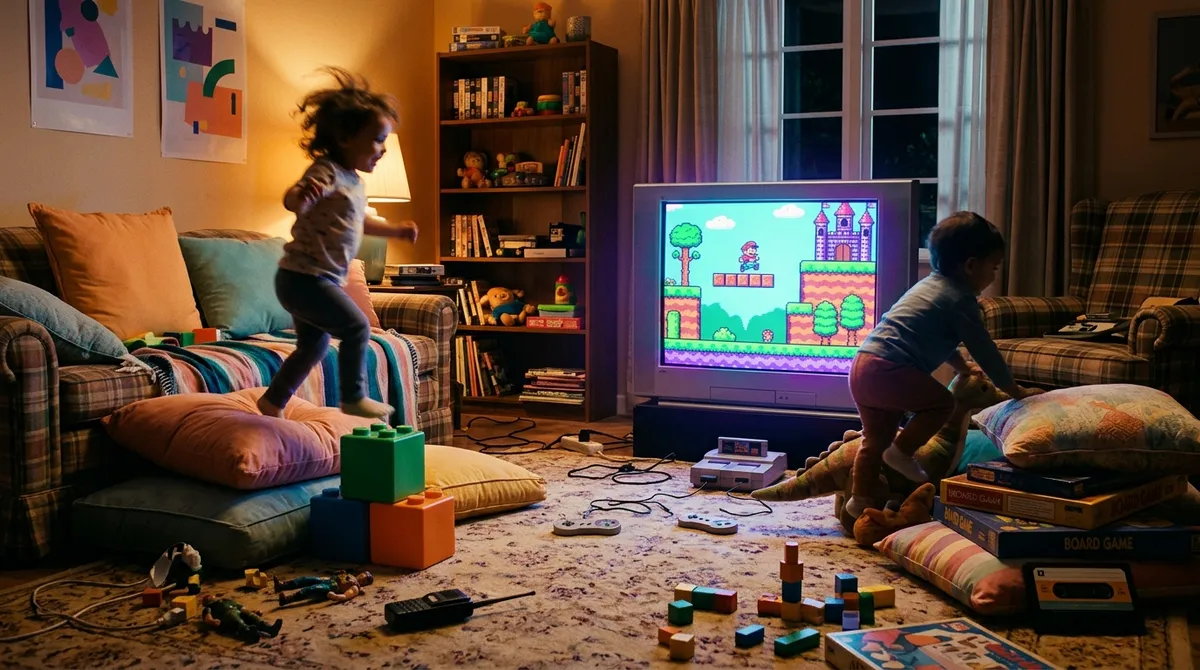
Rugrats: Adventures in Gameland is designed for players who remember the cartoon and those who enjoy approachable retro platformers. The setup is simple and fitting. After seeing a Reptar video game commercial, the babies imagine their world as a full adventure. Ordinary rooms, backyard spaces, and household objects become oversized obstacles in a make-believe quest.
That premise works because Rugrats has always viewed the world from a toddler's perspective. A living room can feel like a dungeon. A backyard can become an expedition zone. A toy can seem like treasure. The game leans into that idea and uses it to justify its whimsical level themes.
The result is a platformer that feels intentionally small in scale but bright in personality. It does not chase modern complexity. Instead, it focuses on readable stages, simple controls, and the familiar charm of the Pickles household.
Tommy, Chuckie, Phil, and Lil each play differently
The four playable babies are more than cosmetic choices. Each character has slightly different abilities, which gives exploration a light strategic layer. Some babies jump better. Others handle lifting or throwing objects more effectively. These differences encourage players to swap characters when approaching tricky platforms or enemy-filled sections.
Tommy serves as the reliable all-rounder. Chuckie fits his cautious personality with movement that feels distinct from the group. Phil and Lil offer their own advantages, making the roster feel useful rather than decorative. In solo play, switching between characters helps uncover paths and handle stage gimmicks.
Local co-op lets two players move through the adventure together. This feature suits the family-friendly tone, though it can also create some screen-management challenges. Like many couch co-op platformers, coordination matters. One player rushing ahead can make platforming less comfortable for the other. Still, the option adds welcome replay value, especially for younger players and parents.
Two visual styles give the game its strongest hook
One of the most appealing features is the ability to shift between a modern cartoon look and an 8-bit presentation. The hand-drawn style captures the colorful Nickelodeon feel, with expressive characters and playful environments. It looks clean, friendly, and immediately recognizable.
The retro mode reimagines the same adventure with a classic NES-inspired appearance. Characters become chunky sprites, details simplify, and the whole game takes on the feel of a lost licensed platformer from the late 1980s. It is a clever feature because it supports both audiences. Rugrats fans can enjoy the cartoon-like presentation, while retro players can lean into the old-school aesthetic.
The audio follows a similar idea. Music and effects support the throwback mood without overwhelming the action. The chiptune-style sound especially fits the 8-bit mode, helping the visual switch feel more complete.
Gameplay favors simple mechanics over deep systems
At its core, Rugrats: Adventures in Gameland is a side-scrolling platform game. Players jump across platforms, avoid hazards, defeat or bypass enemies, collect items, and move toward the end of each stage. The babies can also pick up objects and toss them, which gives the action a familiar retro feel.
The design often recalls classic console platformers where timing and positioning matter more than elaborate move sets. You are not managing skill trees or long combo chains. You are reading enemy patterns, watching jumps, and deciding when to grab or throw items.
This simplicity is both a strength and a limitation. It makes the game easy to understand within minutes. Young players and casual fans can settle in quickly. However, veteran platforming fans may find the mechanics too basic over longer sessions. The game rarely pushes its systems into surprising territory.
Level design turns household spaces into imaginative stages
The best moments come when the game transforms everyday locations through toddler imagination. Familiar spaces become colorful obstacle courses. Oversized objects create a sense of scale, and Reptar-themed details give the adventure a strong Rugrats identity.
Stages are built around straightforward goals, but they include enough alternate paths and collectibles to reward curiosity. Switching characters can help players reach certain areas, and the collectible structure encourages replaying levels. The game does not become a puzzle-platformer, but it adds just enough exploration to avoid feeling completely linear.
Boss encounters add variety and help break up standard platforming. They are generally readable and fit the accessible tone. Players looking for punishing challenge will not find much of it here, but the encounters serve the game's family-friendly direction.
Accessible design makes it welcoming, but not always exciting
Rugrats: Adventures in Gameland clearly aims to be approachable. The controls are uncomplicated, the visual language is clear, and the tone remains light. That makes it a strong match for families, nostalgic fans, and players who prefer relaxed platformers.
At the same time, accessibility can come at the cost of tension. Some levels feel brief, and the game's overall structure does not offer the depth found in the best modern retro revivals. Experienced players may finish the adventure quickly. The limited length makes the game feel closer to a charming weekend playthrough than a major platforming event.
There are also moments where the old-school inspiration shows its rough edges. Certain jumps can feel stricter than expected, and co-op can become messy when both players are not moving at the same pace. These issues do not ruin the experience, but they make the game feel less polished than its presentation suggests.
A game built for Rugrats fans first
The strongest reason to play is the license itself. Rugrats has a specific tone, and the game understands it. The babies are not treated like generic mascots. Their personalities, the Reptar obsession, and the oversized household setting all help the adventure feel connected to the show.
That connection matters because the platforming alone is not especially inventive. Without the Rugrats theme, this would be a pleasant but modest retro game. With the license, it becomes a warm nostalgia piece that captures the fun of seeing these characters in a new playable form.
Players who grew up with Rugrats will likely appreciate the details more than newcomers. The game works for children, but many of its biggest smiles are aimed at adults who remember Nickelodeon's classic era.
Performance and presentation keep the experience smooth
The clean art direction helps the game remain readable during action. Character animations are charming, and environmental details support each stage's playful theme. Whether using the HD visuals or the 8-bit mode, the presentation remains one of the game's most memorable strengths.
The ability to switch styles gives players a reason to experiment. Some may prefer the sharp cartoon look for a first playthrough. Others may stick with the pixel style for the full retro effect. Both versions have value, and that flexibility helps the package stand out.
Across modern platforms, the game is a natural fit for short sessions. It suits handheld play on Nintendo Switch, casual couch play on consoles, and quick completion runs on PC. Its modest scope actually works well for players who want something light between larger releases.
Final verdict: charming, short, and proudly retro
Rugrats: Adventures in Gameland succeeds as a playful retro platformer with strong Nickelodeon nostalgia. Its visual style options, familiar characters, and imaginative household stages create an inviting experience. It is easy to pick up, pleasant to look at, and filled with enough charm to satisfy longtime fans.
However, the adventure is also brief and mechanically simple. Players seeking a deep platforming challenge may wish for more complex level design, tougher encounters, or stronger replay incentives. The game is best approached as a light, nostalgic trip rather than a genre-defining release.
For Rugrats fans, families, and retro platformer collectors, this is an enjoyable return to the playpen. It may not reinvent licensed games, but it understands its audience and delivers a bright, affectionate tribute to Tommy, Chuckie, Phil, Lil, and Reptar.