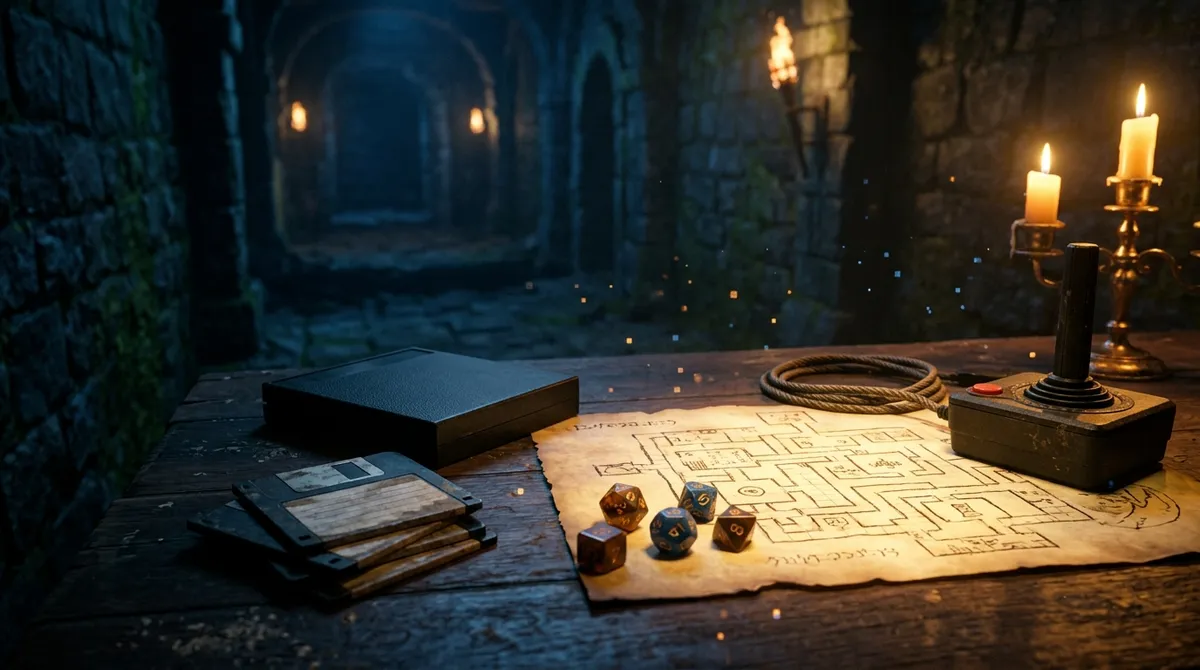
Atari has strengthened its position in classic game publishing by acquiring the rights to the first five Wizardry role-playing games, a move that brings one of the most influential dungeon crawler series deeper into the company's growing retro portfolio.
Atari Secures a Landmark RPG Series
The deal covers the earliest entries in the Wizardry franchise, beginning with Wizardry: Proving Grounds of the Mad Overlord. It also includes Wizardry II: The Knight of Diamonds, Wizardry III: Legacy of Llylgamyn, Wizardry IV: The Return of Werdna, and Wizardry V: Heart of the Maelstrom.
These games helped define the structure of computer role-playing games during the 1980s. Their mechanics influenced party creation, grid-based exploration, turn-based combat, character classes, and dungeon progression. Many modern RPG systems can trace part of their design language back to Wizardry.
Financial details of the acquisition have not been publicly disclosed. However, the purchase gives Atari a more direct role in the future of these early titles. That could include preservation efforts, modern releases, remasters, collections, or new projects inspired by the classic games.
Why Wizardry Still Matters
Wizardry is not just an old RPG series. It is a foundation stone for the genre. The original game launched in the early 1980s and became a key reference point for developers across the world.
Its first-person dungeon exploration, tactical party management, and unforgiving difficulty helped establish expectations for computer RPGs. Players built groups from different fantasy classes, sent them into dangerous labyrinths, and hoped they survived long enough to grow stronger.
That loop became central to dungeon crawler design. The game rewarded patience, planning, mapping, and careful resource use. It was demanding, but it also gave players a strong sense of ownership over each character.
The Wizardry formula became especially influential in Japan. Many developers and studios adopted ideas from its party-based structure and dungeon navigation. Its impact can be felt across classic Japanese RPGs, modern dungeon RPGs, and fantasy adventure games that use class-based progression.
The Five Games Included in the Acquisition
The rights package focuses on the first phase of Wizardry history. Each title played a different role in expanding the series and testing what a computer RPG could do at the time.
Wizardry: Proving Grounds of the Mad Overlord
The first game introduced the core experience. Players assembled a party of adventurers and entered a maze filled with monsters, traps, treasure, and deadly surprises. Its design was simple by modern standards, yet remarkably deep for its era.
Its influence comes from how it combined tabletop fantasy ideas with computer-driven systems. Character statistics, classes, alignment, spells, and permadeath-like danger gave the game weight. Every choice mattered, and every expedition carried risk.
Wizardry II and Wizardry III
The Knight of Diamonds and Legacy of Llylgamyn built directly on the original framework. These sequels continued the party-based dungeon crawling formula and expanded the world of Llylgamyn.
They also reflected a different era of game expansion. Rather than reinventing everything, these entries extended the established adventure. Players who had mastered the first game could carry their knowledge forward into tougher challenges.
Wizardry IV and Wizardry V
The Return of Werdna took a more unusual direction. Instead of following a conventional hero's journey, it experimented with perspective and structure. It remains one of the more distinctive entries in the early series.
Heart of the Maelstrom continued the franchise into the late 1980s. By then, the RPG market had evolved, but Wizardry still held a respected place among dungeon crawler fans. Its systems and style remained closely associated with challenging fantasy role-playing.
How This Fits Atari's Modern Strategy
Atari has spent recent years rebuilding around recognizable game history. The company has acquired, revived, and republished several classic properties. Its strategy often blends nostalgia with modern accessibility.
This acquisition fits that direction. Wizardry has brand recognition among long-time RPG players, but it also offers educational and preservation value. Many younger players know the games by reputation, yet have not experienced them in a practical modern format.
Atari also owns Digital Eclipse, a studio known for its work on retro collections, interactive documentaries, and historically minded re-releases. Digital Eclipse developed the modern remake of Wizardry: Proving Grounds of the Mad Overlord, which launched as a refreshed version of the original game.
That remake showed how a historically important RPG can be updated without erasing its identity. It preserved the classic design while presenting it with modern visuals and interface improvements. Atari's new rights deal may make similar projects easier to pursue.
Potential Benefits for Game Preservation
Classic computer RPGs face many preservation challenges. Old platforms become harder to access. Rights can become fragmented. Source materials may be incomplete. Even when games remain available, they can feel difficult for modern players to run or understand.
When a publisher consolidates rights, it can sometimes simplify future access. That does not guarantee new releases, but it removes one major obstacle. Fans may hope for updated editions, curated bundles, museum-style collections, or enhanced ports.
Wizardry is an especially strong candidate for preservation because of its historical importance. The series shaped interface design, party systems, and dungeon exploration. It also represents a bridge between tabletop role-playing and computer game design.
A carefully handled re-release strategy could help players see how the genre evolved. It could also give developers, historians, and fans a clearer way to study the mechanics that made early RPGs compelling.
What This Could Mean for RPG Fans
For players, the acquisition raises several possibilities. Atari may choose to keep the games available through modern storefronts. It could also explore remasters, collector editions, console ports, or additional remakes.
The company has not announced a full roadmap for the five Wizardry titles. Still, the timing is notable. The recent remake of Proving Grounds of the Mad Overlord brought new attention to the franchise. Owning more early entries gives Atari room to continue that momentum.
Fans of old-school RPGs may be especially interested in how Atari handles difficulty and authenticity. Wizardry gained its reputation through harsh rules, complex party planning, and dangerous dungeons. Modern updates must balance convenience with the tension that made the games memorable.
Quality-of-life features can help without weakening the experience. Better interfaces, improved mapping options, clearer documentation, and flexible display settings can make older RPGs more approachable. The key is to support players while respecting the original design.
A Renewed Future for a Classic Dungeon Crawler
Atari's acquisition of the first five Wizardry games gives the publisher control over a crucial chapter of RPG history. It also continues the company's push into legacy gaming and classic intellectual property.
The move matters because Wizardry is more than a nostalgic name. It is a design ancestor for many games that followed. Its systems helped establish the language of digital role-playing, from party composition to dungeon survival.
If Atari uses these rights thoughtfully, the result could benefit both long-time fans and new players. The early Wizardry games deserve careful preservation, smart presentation, and wider access. With the right approach, these landmark RPGs can continue teaching, challenging, and inspiring for many years to come.